


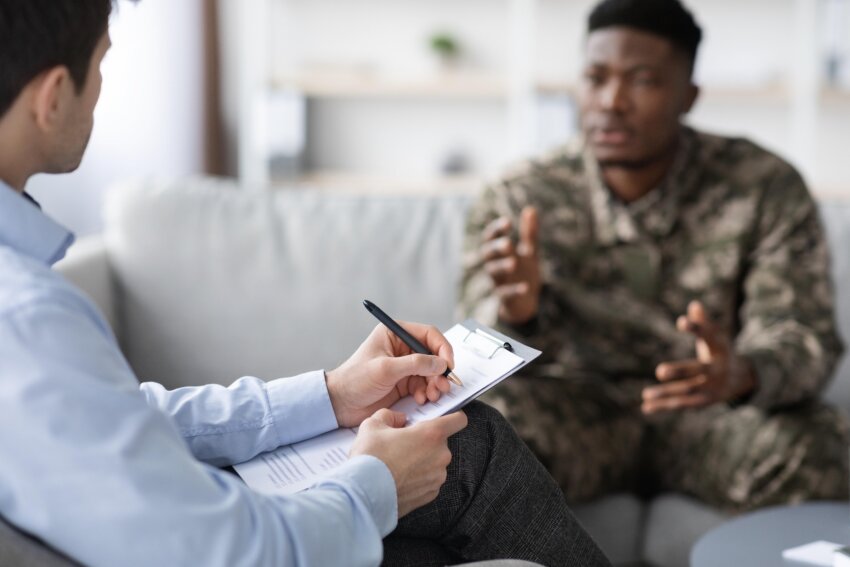
For veterans with mild traumatic brain injury (mTBI), communication difficulties can often lead to issues at work, in relationships and integrating back into the community.
A new collaborative research project is bringing together researchers from The University of Texas at San Antonio with expertise in speech-language pathology, artificial intelligence and veteran care and rehabilitation to turn language into data that could help clinicians better understand, and ultimately treat, cognitive and communication difficulties.
As Veterans Day draws attention to the service and sacrifices of those who have worn the nation’s uniform, Rocio Norman, PhD, CCC-SLP, associate professor in the Department of Communication Sciences and Disorders at the School of Health Professions and co-principal investigator of the project said the work reflects a responsibility that continues long after military service ends: “There’s no higher purpose than serving people who have served our country.”
Speech as a window into brain injury
In addition to Norman, the collaborative project, which received a $200,000 grant from the San Antonio Medical Foundation, is also led by Vivian Ta-Johnson, PhD, assistant professor of psychology in the College for Health, Community and Policy, and Alicia Swan, PhD, an mTBI expert and director of rehabilitation research at the South Texas Veterans Health Care System within the Department of Veterans Affairs.
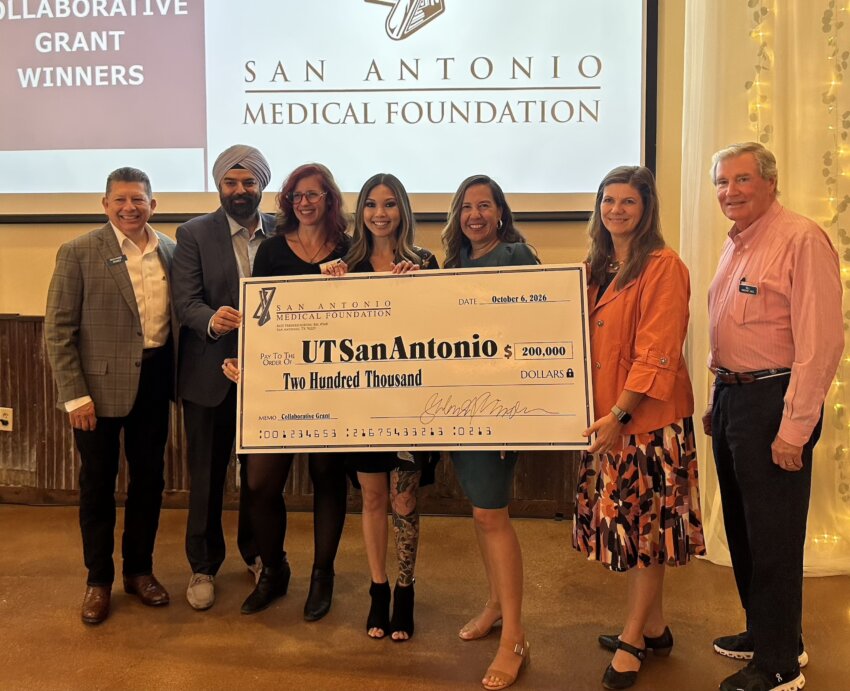
The one-year, proof-of-concept study will use natural language processing, a form of artificial intelligence, to analyze and measure speech and language patterns associated with mTBI, with the intention of creating a tool that would make language analysis practical during a routine clinic visit.
For Norman, a speech-language pathologist who has worked with veterans for 18 years, the study addresses a gap she has seen since treating veterans of the Iraq and Afghanistan wars. Many reported difficulty finding words, organizing their thoughts or keeping up in fast-moving or noisy conversations, even when standard assessments did not show a clear impairment.
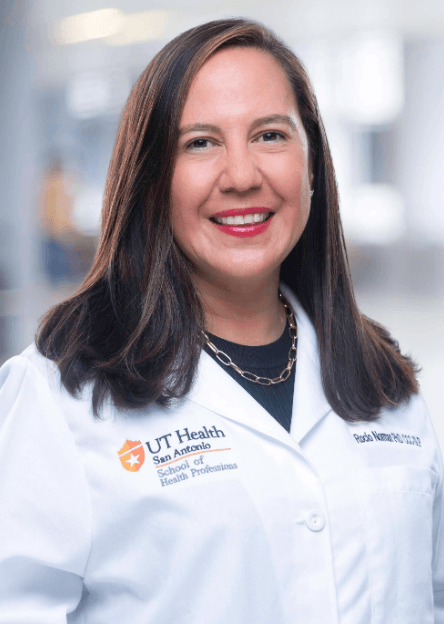
“Many of the problems associated with mild TBI involve higher-level tasks,” Norman explained. “That differs from severe TBI, in which someone may need to relearn how to walk or live independently. With mild TBI, the difficulties may emerge when someone goes to college, returns to paid employment or tries to communicate meaningfully with loved ones.”
Norman said most adult language assessments were developed for people with aphasia — a language disorder affecting communication — following a stroke or individuals with severe brain injury. Veterans with mTBI, however, may retain vocabulary and grammar while struggling with higher-level communication skills such as sequencing ideas, maintaining a coherent narrative, responding to a listener or supplying enough context.
“The work is rooted in clinical experience with patients whose concerns could not be validated objectively,” Norman said. “Objective measurement is fundamental to health care. We use the term ‘biomarker’ because we hope speech could become a biomarker for mild TBI.”
Speech as a biomarker can provide crucial insight into a patient’s cognitive difficulties, Norman said. Successful communication relies on attention, memory, planning and executive function.
“Language is a high-level process that depends on cognition,” Norman said. “If I tell you a story about my day or my last vacation, I plan, execute and organize my thoughts, even if I am not consciously aware of doing it. For people with brain injury, that is often where the breakdown occurs. They still have words, and grammar generally remains intact, but they may have difficulty organizing their thoughts, responding to a listener’s questions or interpreting nonverbal feedback. The difficulty is not at the basic level; it is at the higher level needed for a meaningful life.”
Turning language into data
The study builds on data from a targeted auditory plasticity study that Norman leads at the San Antonio VA, where researchers have already collected recordings in which veterans described how they were injured and recounted an important life event. The recordings were collected at multiple points during treatment.
After the recordings are transcribed, the team will use natural language processing, or NLP, a set of AI-based methods for analyzing language, to convert the language patterns into measurable data, allowing the team to assess features such as coherence, emotional tone, organization and level of detail.

“Natural language processing gives us a way to turn patterns in language into measurable data. We can quantify different aspects of how people communicate, such as how they organize and connect ideas, and then examine those measures alongside clinical and other data,” said Ta-Johnson, a social psychologist with expertise in NLP and computational modeling. “Recent technological advances have made some NLP tools powerful and accurate enough to capture and measure these facets of language in ways we could not before.”
“Language is really powerful, and it provides a rich source of behavioral and cognitive data,” Ta-Johnson said. “We produce language all the time, so why not capture it and use it as data, especially if we can apply it to help a vulnerable population with treatment?”
From research to patient care
The researchers emphasize that the technology is intended to support clinicians, not replace them. Detailed language analysis currently requires time-consuming transcription and coding, often by multiple reviewers. An automated system could flag patterns for a clinician to consider alongside observations and standard assessments, while also saving valuable time for the clinician.
Norman hopes the work can eventually lead to a practical tool that could be used during a routine office visit, but the immediate goal is to determine whether an automated method can objectively identify communication differences and how those differences relate to neurobehavioral symptoms such as anxiety, post-traumatic stress, depression and sleep difficulties. If the pilot produces meaningful findings, the team plans to seek larger federal grants, expand to broader and potentially multisite populations and study more specific cognitive deficits reflected in language.
For veterans, the potential impact extends well beyond a test score. Communication difficulties can affect work, education, relationships, parenting, friendships and the transition back into community life. Objective evidence could help validate experiences that have been difficult to measure and connect more veterans with appropriate care.
“The ultimate goal is to help patients access the care they need, especially in communication, which is vital to community reintegration, relationships, parenting, marriage, friendships — everything,” Norman said. “It’s all for the patient and the betterment of patient care.”